Monday, 20 March 2017

More on Sandy Lane Bridge (Bridge 1473)

Brian Hart (author of The Hawkhurst Branch) has kindly sent me some good pictures that he managed to dig up and like any lazy journalist I will just re-post the photos and reprint his email. We are not aware of any other pictures in existence so it is very generous of him to share these pictures for no financial gain.


          A lot of effort was put into building this bridge for a very insignificant lane.


Looking north, Horsmonden Tunnel is just around the bend. You can see the line 
is climbing in this photograph but the ascent was only about 1 in 117.
The micro climate in that deep cutting must have been interesting in itself - look at all the ferns!


Looking south this time, here the line began the first descent of it's southern journey, shortly after Horsmonden Tunnel. Horsmonden Station platform and buildings would come into view just around the next bend.


Hello Laurence
A few weeks ago I promised you to look out what I had on bridge 1473 a.k.a 'Sandy Lane' 'Back Lane' - or just 'Three arch bridge' as in the SE&CR list of bridges.
I attach all I can find and I'm afraid the quality is a bit iffy. If only those with track passes such as Denis Cullum or J. J. Smith had captured an H or C class steaming through the cutting there!
Nos. 1 and 2 were taken by the chap who lent me his negs back in 1963 for me to make (not very good!) contact prints in my bedroom using my dad's ex-RAF equipment and out-of-date Kodak Velox paper - times were hard then and pocket money sparse! No. 3 was taken by me using my dad's plastic 120 camera when I walked the line as far as Horsmonden with my cousin in tow, as mentioned in the book.
I suspect 1 & 2 are probably the only surviving photos of the bridge which is still there as you know (I expect parapets have gone?) and buried beneath all that soil and rubbish. I wonder if in the far future it will ever see daylight again?
Kind regards
Brian
BTW all is going well with BML2 (despite media reports on the negative and very out of date recent study).


                                                                        ------------------------------

From what I can gather Brian seems to have been fascinated with railways all his life and has written a number of very comprehensive volumes on old railways (see link below). He has also been active within a group who have been campaigning for years to re-open part of the old Uckfield - Lewis line closed in 1969 to allow access to London from Brighton via a quicker route. To their credit they have nearly succeeded.

http://www.brianhartsrailways.com/books.html

http://www.sussexexpress.co.uk/news/campaign-for-a-new-railway-line-is-gathering-pace-1-7063527

Sunday, 19 February 2017

To Ranters Lane Bridge (Rise Bridge)


I have been putting off continuing the journey down the line because parking is so difficult and I did not expect to find much. I did return on a sunny Sunday morning though.


                               Back in the cutting at Finchcocks Road Bridge (south of Goudhurst Station site)

Heading south soon after the bridge there is a large bank of earth but it was actually quite easy to traverse.


     Much as before the cutting continues for another 125 metres or so. It is mid-morning and the line has
     swung south east, so the sun is immediately in front of me.


     All the way along old railway sleepers form the bordering fences to fields of sheep, much as they                    probably did when the line closed in 1961. (Elvis Presley was 'no.1' of the singles chart then with                                                                                  'Surrender').


                  At it's deepest the cutting is about 12 - 15 feet but it shallows out to the south-east.

At first I can hear the 'clip - clopping' of horses on the bridge behind me, then the distant sound of church bells and an occasional squirrel jumping in front of me. I get a sense of belonging being here which is hard to explain.


                                                 On both sides of the cutting and more sleepers.


Soon the cutting comes to an end unfortunately with another bank of earth beyond which I believe is a pumping station and a large house.

I am forced to walk over to Ranters Lane bridge via Blue Coat Lane. Peter Harding has walked the track bed to the bridge (prior to some of it becoming people's gardens) and he said that the bridge was still there but partially buried.


From Blue Coat Lane looking south-west. The line of trees mark the edge of the field adjoining 
the railway.


A bump in the road indicates Ranters Lane Bridge but there is little to see from the top.
It is though quite a height.


The line followed a stream that fed into the River Teise just before the station and there is a foot path up here near this bridge, I followed it into a field but the stream remained in between myself and the track bed, in any case there was nothing to see except for some snowdrops.


Saturday, 11 February 2017

Survivors


As you probably know most of the old steam locomotives met their demise in the 1960's when they were sent to scrap yards to be cut up, but a couple that worked on the Hawkhurst Branch were saved and can be found on The Bluebell Railway (a heritage railway in Sussex). I know little about steam locomotives as I was born a little too late to experience them, but luckily there are lot of websites that provide information.


Locomotive 31592

Originally and now numbered 592, this 'C' Class Wainwright engine was built for the South East and Chatham Railway in 1902, altogether 109 of this design were built of which 106 were still going in 1948 upon nationalisation (it says something about their resilience that so many survived). It was withdrawn from active duty in 1967. It is the only one of it's class to survive.

http://www.railuk.info/members/steam/getsteam.php?row_id=5379

Please copy and paste the above web address into your browser for full specifications.

I can't find any images of this engine pictured on the Hawkurst Line through web searches, but it appears on page 31 of Peter Harding's book and in pictures 31 and 35 of Vic Mitchell's and Keith Smith's book.


                                             South Eastern and Chatham Railway no. 592


Unfortunately the day I visited this loco was in the engine shed as it was not on roster duty so the pictures are dark, I hope to return later and get some better pictures. During BR days most of the locos were painted black and ex Southern region trains were renumbered to five digits beginning with a '3', where did the Bluebell railway get the plate number from I wonder?


                            The engine was undergoing routine maintenance, hence the rags.


    I was struck by the size of the tender, either this engine gobbled large quantities of coal or it could    run for many miles on a full tender.


    The engine has been restored to close to it's original livery which seems to have been green and        red or green and brown during S.E.C.R. days. (The S.E.C.R. lasted from 1899 - 1923 when it              became a part  of the Southern Railway).


'Oh my Daddy my Daddy!'
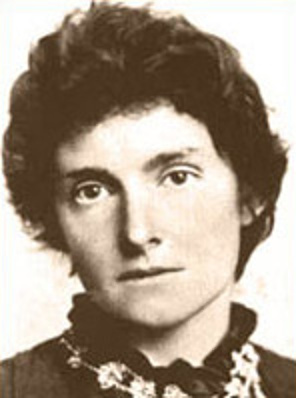
Edith Nesbit's 'The Railway Children' book (1906) was made into a film in 2000 on location at the Bluebell Railway and this locomotive appears in some of the scenes although it was not 'The Green Dragon'.


Edith Nesbit 1858 to 1924                        Image result for edith nesbit images

Edith Nesbit lost her father when she was three and a constant theme of the film is the children trying to remember the father who was suddenly taken from them. After the loss of their father they 'have to play at being poor for a while'. They move to a different part of the country and make friends with an eccentric railway porter. If you are not British you might find it hard to understand the middle class sentiments of this family early in the twentieth century, but it is a very moving story and well worth watching (it can currently be found onYouTube). Nesbit's first husband was a serial philanderer and she was forced to bring up a number of children who were not her own, but she did find love later in life, and married the retired skipper of the Woolwich ferry who was devoted to her. They moved to St Mary's Bay, (if Nesbit had lived another three years she would have witnessed the opening of the Romney, Hythe and Dymchurch miniature railway which still runs through the village).


Locomotive 31263

This is another Wainwright engine that began its working life on the South East and Chatham Railway, this 'H' class was built in 1905 and seems to produce the same amount of boiler pressure as the C class but with a smaller boiler. In British rail days these trains were considered ideal for the Hawkhurst Branch as they were well suited to shunting duties (I think that their wheel base was smaller) and pulling light loads.

Image result for locomotive 31263

                                        31263 at Goudhurst Station circa 1960 heading down the line.


http://www.railuk.info/members/steam/getsteam.php?row_id=5181

More details on link above.


                   (31263) 263 building up steam outside the engine shed at Sheffield Park Station


Sixty-six of these locomotives were built at the turn of the twentieth century, sixty four were still in service in 1948 but nearly all were scrapped during the 1960's. This is the only survivor of it's class.


                                      Seen here shunting carriages prior to a trip up the line.


I felt a quite emotional as this loco came towards me, it felt a bit like a living creature. To think that this once steamed through Horsmonden cutting just beyond our back garden which I only ever knew as a quiet lonely place.


                 Again the livery today is similar to it's original South East and Chatham railway colours.


Reversing onto the platform ready to take a load of passengers towards East Grinstead.

The tender is tiny compared to 31592.


Tuesday, 7 February 2017

An interview with Peter Harding


               Cold, muddy and unappealing, the River Medway in Maidstone threatens to burst it's banks.

I'm in Maidstone to meet Peter Harding as Maidstone United play Aldershot Town. Peter who lives near Woking is a loyal Aldershot fan, whilst I am a Maidstone fan so it is an opportunity to meet up. (Skip this bit if you don't like football).


It's cold and I somehow manage to arrive two hours early but Angela Reed is there nevertheless, selling programs. Every club and society have them, wonderful people who give hours of their time unselfishly. Angela and her husband Bryan have played a huge part in the success of this club. Unfortunately Bryan a postman has to work longer hours now and misses most of the matches. Maidstone's new stand is being built in the background and when erected will bring the capacity up to 4000 to comply with Conference rules. Unfortunately the expense of close to £1,000.000.00 means that the players are part time and only train two evenings a week. Most of the teams in this league are full time professional.


                              A rare Maidstone attack. Psychedelic boots are de rigueur in 2017.

Aldershot were the first team to go bust after Accrington Stanley, in 1991-1992 they were demoted 5 divisions but kept their ground and recovered quickly (now they are pushing for a third spell in the football league). Maidstone went the same way about a month later, but they were demoted 10 divisions and did not even have a ground, so it has been a long slow recovery.

https://www.youtube.com/watch?v=BXOkzy69zu0

'There is always someone worse awf than yourself!'
The above YouTube clip from an East Enders episode sums up the gloom Maidstone fans experienced. Dot is visiting her old stamping grounds in Kent reliving her hop picking days and Jim goes with her but soon gets bored and disappears into a pub.


                                                   **************


                   Peter Harding


Anyway I will not mention the score but I did get to meet Peter and had an easy chat with him. He described how he and his friends would place a penny on the line at Pattenden Siding and wait for a train to run over it, afterwards it would always be many times its original size. He let me email him the following questions which he has kindly answered. Peter also mentioned that he does the artwork for the covers of most of his books. I  had meant to take a photograph but I got distracted (fortunately I had a picture in advance).


1/ Peter I believe you grew up in Goudhurst near the station, do you have any personal memories of the old Hawkhurst Line?

1.    My family moved to Goudhurst in 1946 when I was two years old, my father had a shop in the village at the top of Clay Hill (the first shop in the village coming up from the station). The branch line to Hawkhurst was always part of our lives and in those days nobody ever thought that one day it would not be there, in fact Mr.Burgess of Burgess Stores in the village who at that time would have been in his mid to late sixties remembered the line being opened at Hope Mill and was actually there. As children we would walk the branch line on a Sunday afternoon (no trains on Sunday's except in Hop picking time) from Pattenden Sidings to Goudhurst Station and then up the mile or so to the village. I remember when the Queen Mother (who at that time was the Queen) visited the area to go to Beneden Hospital and review the hops, the whole school marched down to the station and waved union jacks as the train slowly passed through the station, the Queen gave us one of her royal waves!!!.


2/ Can you give us some reminiscences about the hop pickers who used to come to your area every year?

2.    When the hop pickers came they took over all the local villages and Goudhurst became like a mini Brighton with toffee apples and candy floss etc  for sale. They (the hop pickers) used to get up to no good at times (not all of them of course) and an extra copper was sent to the village, in fact the same chap stayed with us each year. They were lovely days and I could go on for ages with some of the stories involving the hop pickers.


3/ You have written a number of books about lost railways including some (to me) quite obscure lines such as'The Hellingly Hospital Railway' and 'The Bisley Camp Branch Line' how long have you been writing these books and what prompted you to start?

3.    I have been writing and publishing my booklets since 1982 when I published the first edition of the Hawkhurst Branch Line, at that time I didn't expect to do any more but, everyone started saying 'what are you doing next?' which made me carry on, I have published at least one booklet a year and have done second editions for most of them and even a third edition of the Hawkhurst booklet. I like to do the obscure lines like the Hellingly Hospital Railway which is one of my best selling publications although the Rye & Camber Tramway is without doubt my best selling one. A shop at Rye sold 400 copies in just over a month when I first published it.


4/ What are you working on now?

4.     I have just finished a second edition (now at the printers) of the Bulford Branch Line (in Wiltshire) which includes the Larkhill Military Railway (which went off the Bulford branch near Amesbury).


5/ How have sales been of 'The Hawkhurst Branch'? 

5.    The sales of the Hawkhurst Branch Line are going okay although things have slowed down a bit lately, I still think that £4.00 is not a bad price (good job my life doesn't depend on it as its only a hobby).


6/ I think you played a lot of football as a school boy around Kent and later you played for Aldershot is that correct?
6.     Football has always played a big part of my life, as a younger person I was a goalkeeper and played for my school at Ashford, Kent (Ashford South School where the former Kent cricket captain Alan Ealham was in my same class), the district boys team Ashford & Weald (I once played against Maidstone boys in the English Schools Shield on the old Maidstone London Road ground, in the Maidstone team was David Sadler who went on to play for Manchester United and England), I was meant to play for Kent Boys against Essex Boys but was ill and missed the game. I was signed on as an amateur for Arsenal after trials at Highbury but then broke my leg throwing a discus back at school!!!!!. After my leg mended, I was loaned out from Arsenal to Bexleyheath & Welling and played in the South East Counties Youth League against all the top Youth teams in London, Arsenal, Chelsea, Spurs etc.
At 19 I joined Aldershot and while playing for their 'A' team I was injured and lost one of my kidneys and my spleen. This meant my football career finished at 19 years old. I still watch Aldershot and I'm a season ticket holder.


                                                                  **********************

http://www.bluebell-shop.co.uk/mall/departmentpage.cfm/BlueBellRailwayShop/_132214/1/Peter%2520A%252E%2520Harding

Peter's books can be purchased from the Bluebell Railway bookshop, their webpage can be accessed by copying and pasting the above into your browser or by simply searching for 'Bluebell Railway bookshop'.

Monday, 30 January 2017

Images come to light of Sandy Lane Bridge (now buried)


Here the train would have just left Horsmonden Tunnel heading south towards Horsmonden Station in the deepest part of the cutting, the camera was placed high up above the locomotive's boiler thus obscuring the track bed so the pillars were somewhat taller than the picture suggests. The train's funnel hides part of the left hand arch and deep vegetation obscures the right side of the bridge.

This wonderful bridge rose about 45 feet above the track bed, it was never photographed because passengers never saw it (they only saw parts of it's piers from their windows). Being in such a deep cutting it was also inaccessible, and the dense vegetation tended to obscure the view anyway. There is only one stock photo known to exist which is in the British Railways archive and appears on page 114 of Brian Hart's book 'The Hawkhurst Line'. Nobody knows much about this bridge, even the Horsmonden historical society describe it as a 'small bridge'.


Although buried today the bridge is still used to carry cars and passengers along Back Lane as it is now called.

I managed to obtain this blurry image from a recently uploaded You Tube video taken from the drivers cab in 1958. Thanks to my daughter Louisa (who has paint on her p.c) for her help.

The full clip can be found here:

www.youtube.com/watch?v=PO69U5Blvxo

This bridge must have been built in 1891 or early 1892 before Swigs Hole bridge for example because a half mile long embankment was built from North of the tunnel to Yew Tree Green road using the spoil from the cutting (which had to be removed first). Residents on the left of the bridge would have been stranded  having to make a long deviation to reach the village, so the engineers would have been obliged to build the bridge quickly. This was the first railway that Colonel Stephens worked on as resident engineer and important because the bridge was possibly his first major construction.

I have informed David Scully the Landscape and Biodiversity officer at Tunbridge Wells Council who was very interested, emailed the Colonel Stephens Society, and Yolanda Laybourne of the Hop Pickers Line Heritage Group who have been successful recently in generating council interest in the Hawkhurst Line.

Wednesday, 11 May 2016

Tunbridge Wells Historic Environment Desk Based Assessment for the PWH BL

I came across this assessment which was conducted in January 2016, it gives a lot of clues to the history of the Paddock Wood and Hawkhurst Branch Line since it's closure in 1961. There are also a lot of photographs of remaining structures and remnants, their significance and suggestions that some should receive listed buildings status. They even found some track which was never lifted, well worth a read! Please use the links below.

http://www.tunbridgewells.gov.uk/__data/assets/pdf_file/0003/119307/33013-HPLHG-DBA-Volume-1-Report-low.pdf

http://www.tunbridgewells.gov.uk/__data/assets/pdf_file/0004/119308/33013-HPLHG-DBA-Volume-2-Figures-v2_Part1.pdf


I see that the survey has recommended that some surviving structures (Swigs Hole Bridge at Horsmonden, the surviving station buildings and goods shed at Cranbrook, Badgers Oak Tunnel near Cranbrook Station and the goods shed at Hawkhurst) for preservation, I hope that Tunbridge Wells Borough Council do act on this recommendation before any other structures are lost.

I see that the enquiry was chaired by Yolanda Leybourne who has almost certainly pushed the council to conduct this investigation. A few years ago she tried to save the old engine shed from demolition on Hawkhurst Station's site. Over the last few years she has been working tirelessly to try to preserve the line as a walkway, Hawkhurst, Cranbrook, Goudhurst, and even Paddock Wood parish councils all said they would try to support the project, but I'm offering no prizes for guessing which parish council refused to have anything to do with it.
The Hop Pickers Line Project did obtain a grant for £10,000.00 from Tunbridge Wells district council to do some preliminary clearing work around Badgers Oak Tunnel and most landowners on the route said they were prepared to allow walkers to use the track bed, but one person did object so I don't know what the state of the project is now.

http://www.visithawkhurst.org.uk/directory/44175/the-hop-pickers-line-project/

Please see my posting on Back Lane Bridge for later updates.

Saturday, 20 February 2016

The Hawkhurst Branch Line (3rd Edition)

Peter Harding emailed me recently to advise that the third edition of his book 'The Hawkhurst Line' has just been published and would I like a copy? We had been in touch last spring when I wrote to Network Rail, and I emailed him, (he was very kind and supportive).
I feel compelled to plug his booklet which is only available at the Bluebell Bookshop at present for £4.99 (see my book review blog).


As you can see the third edition (right) is very much like the second on the outside and both contain 32 pages with the same information, but he has managed to obtain a number of new pictures (some of which I have never seen).


                                 Above: A little about Horsmonden and Goudhurst Stations


The clarity of the photographs are also better when compared to the earlier edition.